Excel Vba Examples Download

This Workbook shows how you can use the Worksheet_Calculate Event and a Validation list to have formulas automatically reference different Workbooks. The code has been set so it works in both Excel 97 and 2000. The reason it uses the Worksheet_Calculate Event and not the Worksheet_Change is because a Validation list will not fire the Worksheet_Change Event in Excel 97.
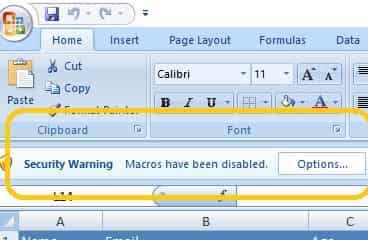
This download contains four Workbooks. They should be all saved to the same folder on your hard drive. Then open ' ChangingExternalFormulas'.
Excel VBA – Information, Tutorials, Examples & Resources Excel VBA allows you to automate various activities you do in Excel. We use Excel to analyze data, create reports, prepare charts & presentations, do calculations and understand information.
Using Excel Macros can speed up work and save you a lot of time. While writing an Excel VBA macro code may take some time initially, once it's done, you can keep it available as a reference and use it whenever you need it next. In this massive article, I am going to list some useful Excel macro examples that I need often.
When we are doing all these, we spend quite some time, repeating same steps. For example, we may prepare and email same type of report every week with different data. By using Excel VBA, we can cut down the time we spend repeating these steps and improve our productivity.
In this section of our site, you will find information, tutorials, examples, tips & resources on Excel VBA & Macros. In this page More on Excel VBA What is VBA? VBA stands for Visual Basic for Applications. Just like you and I have a language, computer programs too have their own language.
VBA happens to be the language in which Excel speaks. For that matter, VBA is also the language of MS Word, PowerPoint, Access and other MS Office applications. The prospect of learning new languages scares us a lot.
But worry not, VBA is much easier to learn than French, Spanish, German or Chinese. The main reason why VBA is easy to learn is because it almost looks like plain English. For example the following line says hello to you: MsgBox 'hello' Just like any language, VBA too has its own rules, grammatical structures & nuances. Once you understand these, speaking VBA with Excel becomes as easy as chatting with your friend over a drink. What is a Macro? While VBA is the language which Excel speaks (and understands), Macro is like a paragraph. In other words, a Macro is a set of instructions given to Excel to accomplish something.
For example, this is a macro for generating a report (written in plain English, not VBA) • Open data.xls • Take last 30 days of data • Prepare a bar chart • Copy the chart to a new workbook • Save the workbook as a PDF • Email it to boss When we execute or run this macro, we end up generating the report & mailing it. Basics of VBA & Macros – Writing our First Macro In this section, lets build our first macro. We will write a MakeMeRed() macro, that paints red color in any selected cell(s). Like this, Enabling Developer Ribbon in Excel In order to record and use macros (and other developer features), the first step is to activate Developer Ribbon (or Developer Toolbar). This is done by, Excel 2007: 1. Click on Office button (top left) 2.
Go to Excel Options 3. Go to Popular 4. Check “Show Developer Tab in Ribbon” (3rd Check box) 5. Excel 2010: 1.
Click on File Menu (top left) 2. Go to Options 3. Select “Customize Ribbon” 4. Make sure “Developer tab” is checked in right side area 5. Using Excel’s Built-in Macro Recorder In order to write your first VBA program (or Macro), you need to know the language first. This is where Excel’s tape recorder will help us.
Tape Recorder?!? Excel has a built-in tape recorder, that listens and records everything you do, in Excel’s own language, ie VBA. Since we don’t know any VBA, we will use this recorder to record our actions and then we will see recorded instructions (called as code in computer lingo) to understand how VBA looks like.
Step 1: Select any cell & start macro recorder This is the easiest part. Just select any cell and go to Developer Ribbon & click on Record Macro button. Step 2: Give a name to your Macro Specify a name for your macro. I called mine MakeMeRed. You can choose whatever you want. Just make sure there are no spaces or special characters in the name (except underscore) Click OK when done. Step 3: Fill the current cell with red color This is easy as eating pie.
Free Download Bates Numbering Adobe 11 Programs For Weddings more. Just go to Home ribbon and fill red color in the current cell. Step 4: Stop Recording Now that you have done the only step in our macro, its time to stop Excel’s tape recorder.