Lily King Euphoria Discussion Questions
Jun 13, 2014. We spoke to Lily King about Margaret Mead, the inspiration behind King's acclaimed new novel, Euphoria. She and her loose-cannon husband, Fen, are looking for a new subject of study when they happen upon a colleague and competitor—an affable Brit who reignites Nell's intellectual curiosity and.
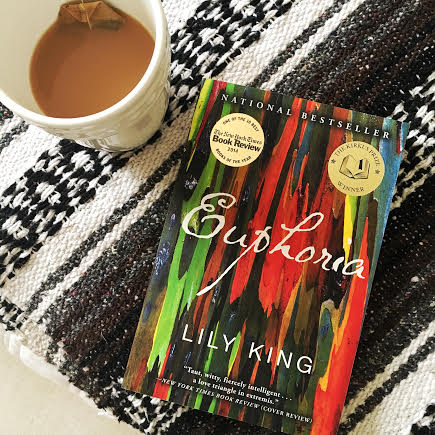
Set against the lush tropical landscape of 1930s New Guinea, this novel charts British anthropologist Andrew Bankson’s fascination for colleagues Nell Stone and her husband, Fen, a fascination that turns deadly. How far does the setting play a role in shaping events?
Is there a sense that the three have created their own small universe on the banks of the Sepik River, far removed from the Western world? If so, by whose rules are they playing?
“She tried not to think about the villages they were passingthe tribes she would never know and words she would never hear, the worry that they might right now be passing the one people she was meant to study, a people whose genius she would unlock, and who would unlock hers, a people who had a way of life that made sense to her” (p. In the light of this quote, discuss Nell Stone’s passion and need for anthropology and find ways in which they differ from Bankson’s and Fen’s. Talk about the significance of her childhood dream of being carried away by gypsies.
Dragonii Te Invata Limba Engleza Torent there. Continue your discussion by considering Nell’s statement: “If I didn’t believe they shared my humanity entirely, I wouldn’t be hereI’m not interested in zoology” (p. Find instances in the novel in which she demonstrates this. How far do you agree, as Nell states, that it is an anthropologist’s role to encourage self-analysis and self-awareness in the tribes he/she studies? Over the course of the novel we learn a great deal about Bankson’s childhood and young adulthood. Talk about the reasons and life events that brought him to anthropology. What has led him to the brink of suicide?
How seriously do you think he views his statement: “The meaning of life is the quest to understand the structure and order of the natural world --- that was the mantra I was raised on. To deviate from it was suicide” (p.
Given his upbringing and his father’s passion for “hard” science, Nell’s focus on humanity instead of zoology must hold great appeal for Bankson. What else draws him to Nell, leaving him with “Fierce desires, a great tide of feeling of which I could make little sense, an ache that seems to have no name but want.
What exactly does Bankson want? Discuss the ways in which Bankson’s attitude toward his work changes as he gets to know Nell and her research methods.
Consider his acknowledgment of the limitations of an anthropologist’s work and discuss how far it is possible to ever get to know another’s culture. Take into account Bankson’s interest in the objectivity of the observer.
Take your discussion of the previous question a step further by considering whether it is ever possible to truly know another person. Apply your observations to Bankson’s views of Nell and Fen. The theme of possession, of ownership, runs throughout the novel, twisting like the river Sepik itself through the relationships and conversations of the protagonists. Talk about Nell’s search for “a group of people who give each other the room to be in whatever way they need to be” (p.
Has she found this kind of freedom in any of the tribes she has studied? In any of her relationships? Talk specifically about Fen and Bankson.
Further your discussion by focusing on the idea of words and thoughts as things to be owned --- as Nell states, “once I published that book and my words became a commodity” (p. How has this impacted her relationship with Fen?
Consider her statement “I only know that when F leaves and B and I talk I feel like I am saying --- and hearing --- the first wholly honest words of my life” (p. On several occasions during the novel, Nell refers to an Amy Lowell poem, “Decade. Fs Racing Buggy Manual Arts. ” Why do you think the poem holds such meaning for her? How does the poem’s central idea --- of feelings for a lover changing from the sweet, almost painful intensity of red wine into the blissful satisfaction of bread --- relate to her and her own relationships? While Nell declares later that “He is wine and bread and deep in my stomach” (p. 247), do you believe that Bankson was able to give Nell the freedom she was looking for? How or how not? Could it have led inevitably to her death?
How far would you consider Nell to be the epitome of a young, independent accomplished woman? Talk about her character, her personality, work habits and motivations.
Then discuss her disturbing relationship with Fen, and her inability to escape his harm. How did she end up in such an untenable situation?