Smtp Tutorial
Introduction This tutorial describes how to use PHPMailer. Note that this tutorial is based on an old version of PHPMailer, and parts of it no longer work the same way with PHPMailer 6.0.
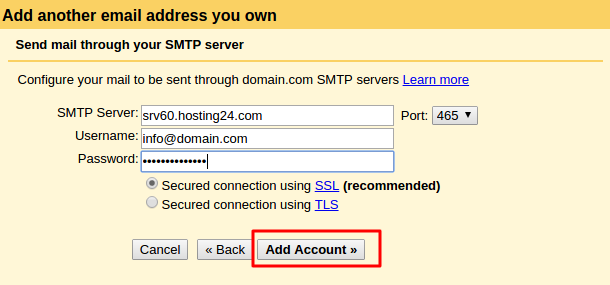
In the OSI model, SMPT is an application layer protocol that utilizes TCP as the transport protocol to transmit mail to a destination mail exchanger, in other words, SMTP is used to transmit mail to a mail server. Mail can be transmitted by a client to the mail exchanger server, or from mail exchanger to mail. Audio Driver Windows 10 Realtek.
Please refer to the readme file. Based on a tutorial by Tom Klingenberg Contents • PHPMailer: What is it? What does it do? Who needs it? Brief examples of PHPMailer's features.
• First time: Sending your first email with PHPMailer. • Using Attachments: Sending mails with file attachments: filesystem, database or inline. • Using HTML Mail: Using the class' integrated HTML email features. • Support: Where do I get help?: How to find support resources: PHPMailer website, mailing list etc. • Other Resources: Email and PHP Resources: There is a lot of information in the net about email, php and PHPMailer. PHPMailer PHPMailer is a class library for that provides a collection of functions to build and send email messages. PHPMailer supports several ways of sending email: mail(), Sendmail, qmail & direct to SMTP servers.
You can use any feature of SMTP-based e-mail, multiple recepients via to, CC, BCC, etc. In short: PHPMailer is an efficient way to send e-mail within PHP. PHP has a built-in mail() function. So why use PHPMailer? Isn't it slower? Not really, because before you can send a message you have to construct one correctly, and this is extremely complicated because there are so many technical considerations.
PHPMailer makes it easy to send e-mail, makes it possible to attach files, send HTML e-mail, etc. With PHPMailer you can even use your own SMTP server and avoid Sendmail routines used by the mail() function on Unix platforms.
This tutorial explains how to implement the class in your script or website and how to build an e-mail application. Because using mail() has so many hidden problems, we strongly suggest you don't call it yourself - if you don't want to use PHPMailer, use another established email library such as SwiftMailer, Zend_Mail etc. Almost every code example you will find online using mail() (including the PHP documentation for the mail() function) has problems that can be avoided by using a library. First time Before continuing, please be sure that PHPMailer is installed correctly. If you feel uncertain, please read the installion instructions that accompany the package. If you're still not sure, you can verify that you've installed PHPMailer correctly with this little script. $mail ->setFrom( 'from@example.com ', 'Your Name '); Enter the address that the e-mail should appear to come from.
You can use any address that the SMTP server will accept as valid. The optional second parameter to this function is the name that will be displayed as the sender instead of the email address itself.
The following will add an address to which the e-mail will be sent. You must use a valid e-mail here so that you can verify that your PHPMailer test worked. Just your own e-mail address here for this test. As with the setFrom method, you may optionally provide a display name for the recipient. $mail ->addAddress( 'myfriend@example.net ', 'My Friend '); Setting the subject and body is done next by setting the Subject and Body properties directly - note that they are case-sensitive, so don't try to set subject or body. Finally, we send out the e-mail, once all necessary information has been provided. This is done with $mail->Send().